

PMS affects up to 80% of menstruating women. That’s not a niche audience. That’s nearly every woman between puberty and menopause experiencing some combination of cramps, mood swings, insomnia, bloating, and irritability on a monthly cycle, often for decades.
And yet almost no hemp brand publishes content specifically for women. Product guides are written as if everyone’s endocannabinoid system works the same way. They don’t. Estrogen directly modulates CB1 receptor density, which means women experience THC differently depending on where they are in their menstrual cycle. A 2025 Colorado State University study found that women reported approximately 20% stronger subjective effects from the same THC dose during the follicular phase (high estrogen) compared to the luteal phase (low estrogen).
This guide organizes Exhale products by the symptoms women actually deal with, explains the biology behind why each product works for that symptom, and includes the cycle-based dosing adjustments that generic guides ignore.
How Your Cycle Affects Your Cannabinoid Sensitivity
Before matching products to symptoms, you need this context. It changes how you dose everything.
Your endocannabinoid system doesn’t operate at a constant level throughout the month. It fluctuates with your hormones.
Follicular phase (days 1 to 13, estrogen rising): CB1 receptor density increases as estrogen rises. You become more sensitive to THC. Your normal dose may feel stronger than expected, particularly around ovulation when estrogen peaks. Consider reducing THC dose by 20% to 30% during this window.
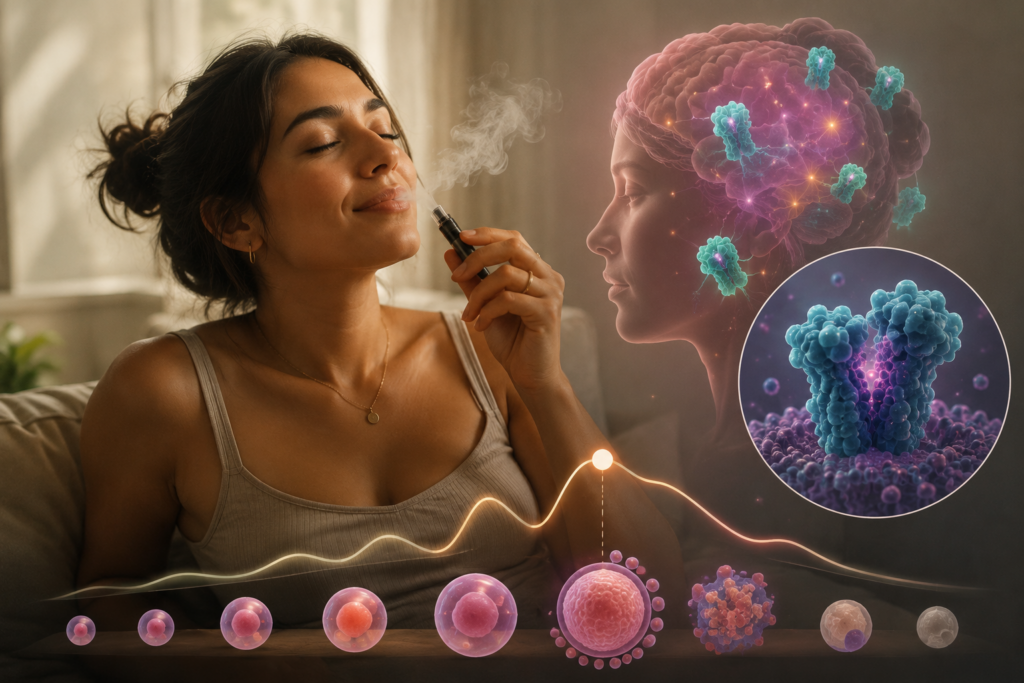
Luteal phase (days 14 to 28, progesterone dominant, estrogen declining): CB1 receptor activity decreases. Anandamide (your body’s natural endocannabinoid) drops. You become less sensitive to THC, which is why many women notice their usual dose “doesn’t hit as hard” in the week before their period. This is also when PMS symptoms escalate because the anandamide decline contributes to increased pain sensitivity, mood instability, and sleep disruption. You may need your standard dose or slightly more during this phase.
Menstruation (days 1 to 5): Both estrogen and progesterone are at their lowest. Endocannabinoid tone is low. Pain sensitivity is heightened. Cannabis use during this phase may effectively supplement the endocannabinoid activity your body isn’t producing enough of on its own. A 2025 study in Addictive Behaviors confirmed that women use more cannabis during premenstrual and menstrual phases, primarily to manage increased discomfort.
Track your cycle alongside your cannabinoid use for two months. The patterns will reveal your personal sensitivity windows more precisely than any general guideline can.
Cramps and Menstrual Pain → THC Gummies + CBD Salve
Why THC for cramps: Menstrual cramps are caused by prostaglandin-driven uterine muscle contractions. THC binds to CB1 receptors in the uterus and central nervous system, producing antispasmodic effects (muscle relaxation) and analgesic effects (pain signal modulation). Cannabis for menstrual pain is one of the oldest documented uses of the plant, and modern research supports the mechanism.
What to use:
Delta-9 Gummies (15mg per piece, take half to start) provide systemic pain relief and muscle relaxation that addresses cramps from the inside. The edible format’s 4 to 6 hour duration covers the worst cramping window. Take 60 to 90 minutes before expected cramp onset.
CBD Relief Salve applied topically to the lower abdomen delivers localized anti-inflammatory and muscle-relaxing effects directly at the source. Massage into the skin over the uterine area 2 to 3 times daily during heavy cramping days. Topical CBD doesn’t enter the bloodstream, so there are no psychoactive effects and no drug test concerns.
The combination: Systemic THC (gummy) for overall pain modulation plus localized CBD (salve) for targeted uterine inflammation creates a two-pathway approach that works better than either alone. Start with the salve if you want to avoid THC during the day, and add the gummy in the evening when cramping typically intensifies.
Mood Swings and PMS Irritability → CBD Gummies
Why CBD for mood: PMS mood symptoms (irritability, anxiety, weepiness, emotional volatility) are driven by the hormonal shift during the luteal phase combined with declining anandamide levels. CBD acts as a partial agonist at 5-HT1A serotonin receptors and modulates the ECS indirectly, supporting emotional stability without psychoactive effects.
A 2024 randomized study found that women taking oral CBD reported improvements in PMS mood swings alongside cramp relief. The anxiolytic effect is the key mechanism: by reducing the heightened anxiety sensitivity that progesterone dominance creates, CBD smooths the emotional reactivity that makes small stressors feel catastrophic during PMS week.
What to use:
CBD Gummy Cubes (25mg full-spectrum CBD per piece) taken daily starting 5 to 7 days before your expected period. CBD’s mood-stabilizing effects build cumulatively, so starting before symptoms peak means the support is already active when you need it most.
Dosing by cycle phase: 25mg daily during the luteal phase (when mood symptoms build). Optional 50mg on the worst PMS days. Scale back to 25mg or as-needed during the follicular phase when mood typically stabilizes naturally.
Sleep Disruption → D9+CBN Sleep Gummies
Why sleep suffers during PMS: Progesterone, which promotes sleep during the mid-luteal phase, drops sharply in the days before menstruation. Simultaneously, anandamide levels decline, reducing the endocannabinoid-driven sleep support your body normally provides. The result: difficulty falling asleep, more frequent night waking, and lighter, less restorative sleep precisely when your body needs recovery most.
What to use:
D9+CBN Sleep Gummies combine Delta-9 THC (quiets mental chatter, promotes sleep onset) with CBN (the most sedation-associated cannabinoid) and melatonin (circadian rhythm support). Take 60 to 90 minutes before bedtime during the 5 to 7 days surrounding menstruation when sleep disruption peaks.

Cycle-adjusted dosing: During the luteal phase when THC sensitivity decreases, your standard dose may feel less effective for sleep. If half a sleep gummy worked during ovulation but doesn’t during PMS week, a full gummy may be appropriate. This isn’t tolerance buildup. It’s hormonal modulation of receptor sensitivity that resets with your cycle.
Low Libido and Intimacy → Libido Gummies + Cannabis Lube
Why hormonal fluctuations affect desire: Estrogen drives physical arousal response. Progesterone can suppress desire. Stress and PMS mood symptoms add a psychological barrier on top of the hormonal one. The combined effect leaves many women experiencing cyclical libido dips that feel frustrating and disconnected from their actual relationship satisfaction.
What to use:
Fresh Peach Libido Gummies (7.5mg D9 + CBG + CBC + CBN + icariin + mucuna pruriens + L-arginine + Korean Red Ginseng) target both the psychological barrier (THC reduces self-consciousness and anxiety) and the physical barrier (icariin and L-arginine support blood flow to genital tissue). Research in the Journal of Cannabis Research found over 70% of cannabis users reported increased desire and orgasm intensity.

Cannabis Lube applied topically 15 to 20 minutes before intimacy provides localized cannabinoid delivery that enhances sensitivity and blood flow at the application site, adding a physical dimension that systemic gummies alone don’t reach.
Timing within cycle: Libido naturally peaks around ovulation (days 12 to 16) when estrogen is highest. If using Libido Gummies during this high-sensitivity window, consider half a gummy since estrogen amplifies THC effects. During the luteal phase or menstruation when desire typically dips, a full gummy may be needed.
Perimenopause and Menopause Symptoms → CBD + THC + Blue Lotus
Why menopause disrupts everything: Declining estrogen during perimenopause and menopause reduces CB1 receptor density permanently, not cyclically. This means the endocannabinoid system that regulated mood, sleep, pain, and temperature for decades becomes less effective at all of those jobs simultaneously. Hot flashes, night sweats, insomnia, anxiety, joint stiffness, and mood instability are all connected to this ECS downregulation.
What to use:
CBD Gummy Cubes (25mg daily) for baseline anti-inflammatory support and mood stabilization through serotonergic modulation. This is the foundation of a menopausal cannabinoid protocol.
D9+CBN Sleep Gummies for the insomnia and night sweats that disrupt sleep quality. CBN’s sedative properties help with sleep onset, while THC reduces the anxiety that accompanies nighttime temperature fluctuations.
Blue Lotus + D9 Gummies for mood elevation during the emotional volatility of hormonal transition. Blue Lotus’s dopaminergic activity (through apomorphine and nuciferine) addresses the mood dimension through pathways entirely separate from the endocannabinoid system, adding a layer of emotional warmth that CBD and THC alone may not fully provide.
Dosing note for menopausal women: With permanently reduced CB1 receptor density, menopausal women may need slightly higher THC doses than premenopausal women to achieve comparable effects. Start at standard doses and titrate upward gradually. Because estrogen is no longer cycling, the monthly sensitivity fluctuations described above no longer apply, and dosing can remain consistent.
The Monthly Product Calendar
| Cycle Phase | Days | Primary Symptoms | Recommended Products |
|---|---|---|---|
| Menstruation | 1 to 5 | Cramps, fatigue, pain | D9 Gummy (half to full) + CBD Salve on abdomen |
| Follicular | 6 to 13 | Mood improves, energy returns | CBD Gummies (daily baseline), reduce THC doses 20% |
| Ovulation | 14 to 16 | Peak energy, peak THC sensitivity | Lowest THC doses if using, CBD as maintenance |
| Luteal (early) | 17 to 22 | Mood begins shifting, sleep disruption starts | CBD Gummies (25-50mg), Sleep Gummy if needed |
| Luteal (late) / PMS | 23 to 28 | Cramps begin, mood swings, insomnia, bloating | Full protocol: CBD daily + D9 for cramps + Sleep Gummy at night |
Important Considerations for Women
Fertility and trying to conceive. A 2025 review published in the Journal of Applied Toxicology noted that exogenous cannabinoids may interfere with the endocannabinoid system’s role in ovulation, embryo transport, and implantation. If you are actively trying to conceive, discuss cannabis use with your reproductive endocrinologist. Most fertility specialists recommend discontinuing THC products during conception attempts. 
Pregnancy and breastfeeding. THC crosses the placental barrier and is present in breast milk. No safe level of THC exposure during pregnancy has been established. All THC products should be discontinued during pregnancy and breastfeeding. CBD products should also be discussed with your OB-GYN.
Hormonal medications. Birth control pills, HRT (hormone replacement therapy), and other hormonal medications may interact with how your body processes cannabinoids. THC and CBD are metabolized by CYP3A4 and CYP2C9 enzymes, which also process many hormonal medications. Consult your prescribing physician before combining.
Drug testing. All THC-containing products (D9 Gummies, Libido Gummies, Sleep Gummies, Blue Lotus D9 Gummies) will produce metabolites detectable on standard panels. Full-spectrum CBD carries very low but non-zero risk. CBD Salve (topical) does not enter the bloodstream and carries no drug test risk.
Bottom Line
Women’s bodies interact with cannabinoids differently than men’s, and those differences change monthly with hormonal fluctuations. A hemp product that works perfectly during the follicular phase may underwhelm during PMS week, not because the product changed but because your receptor sensitivity did.
Matching products to symptoms, adjusting doses to cycle phases, and tracking responses over two to three months builds a personalized protocol that generic dosing guides can’t provide. The five products in this guide cover the five symptoms that affect women most: cramps (THC + topical CBD), mood (CBD gummies), sleep (CBN sleep gummies), intimacy (Libido Gummies + Cannabis Lube), and menopausal transition (multi-product stacking).
Your cycle isn’t a problem to solve. It’s a variable to account for. Dose accordingly.
Disclaimer: This article is for informational purposes only. These products are not FDA-approved for treating dysmenorrhea, PMS, menopause, or any medical condition. THC products produce psychoactive effects and appear on drug tests. Discontinue THC use if trying to conceive, pregnant, or breastfeeding. Consult a healthcare provider before combining cannabinoids with hormonal medications.